
Operational leadership
3 Signs Your Restaurant Is Running on Chaos
Most restaurant chaos does not appear suddenly. It builds slowly through unclear systems, reactive management and operational overload.
 Tasca May 08, 2026 3 min read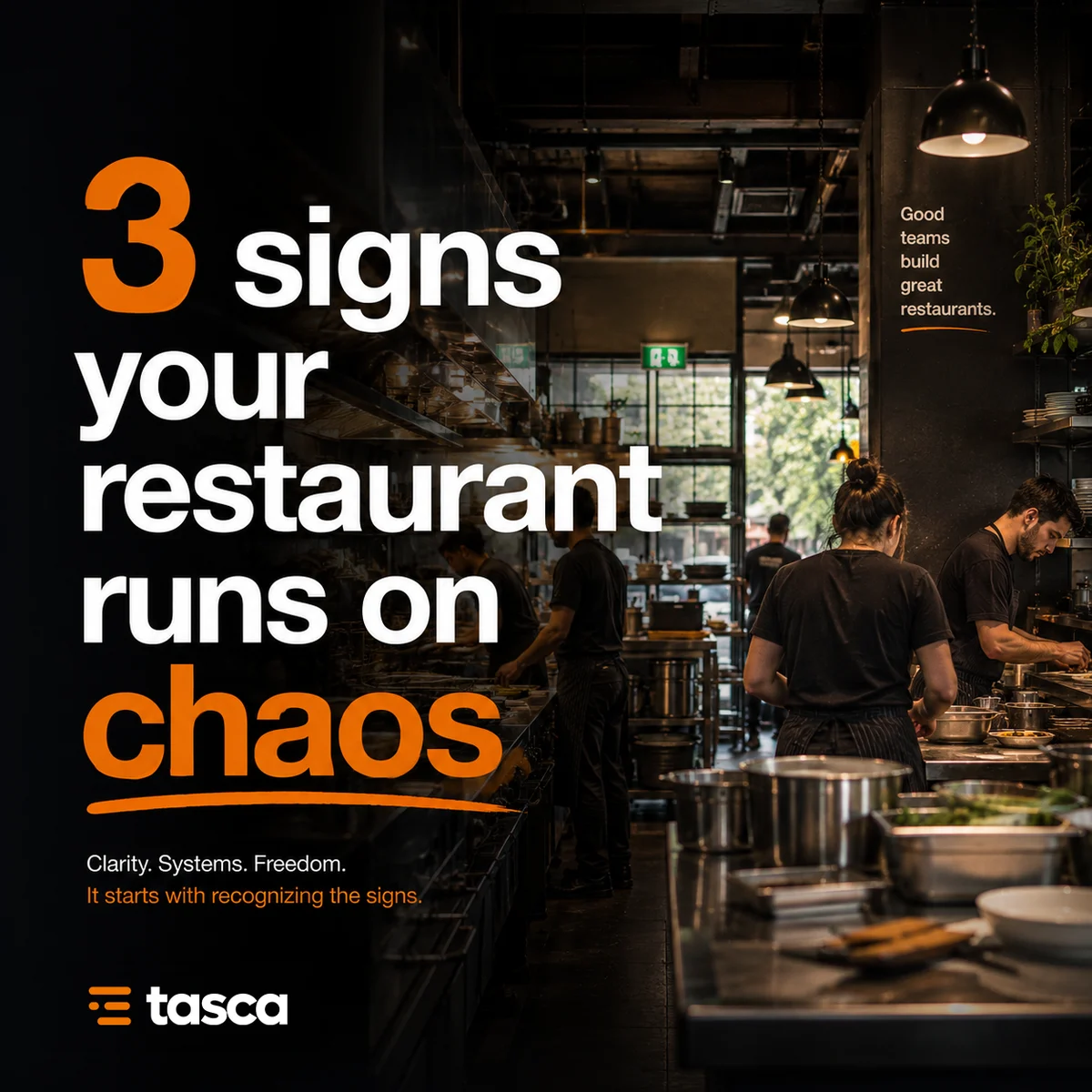
Most restaurant chaos does not appear suddenly.
It builds slowly through unclear systems, reactive management and operational overload.
The problem is that, after a while, chaos starts feeling normal.
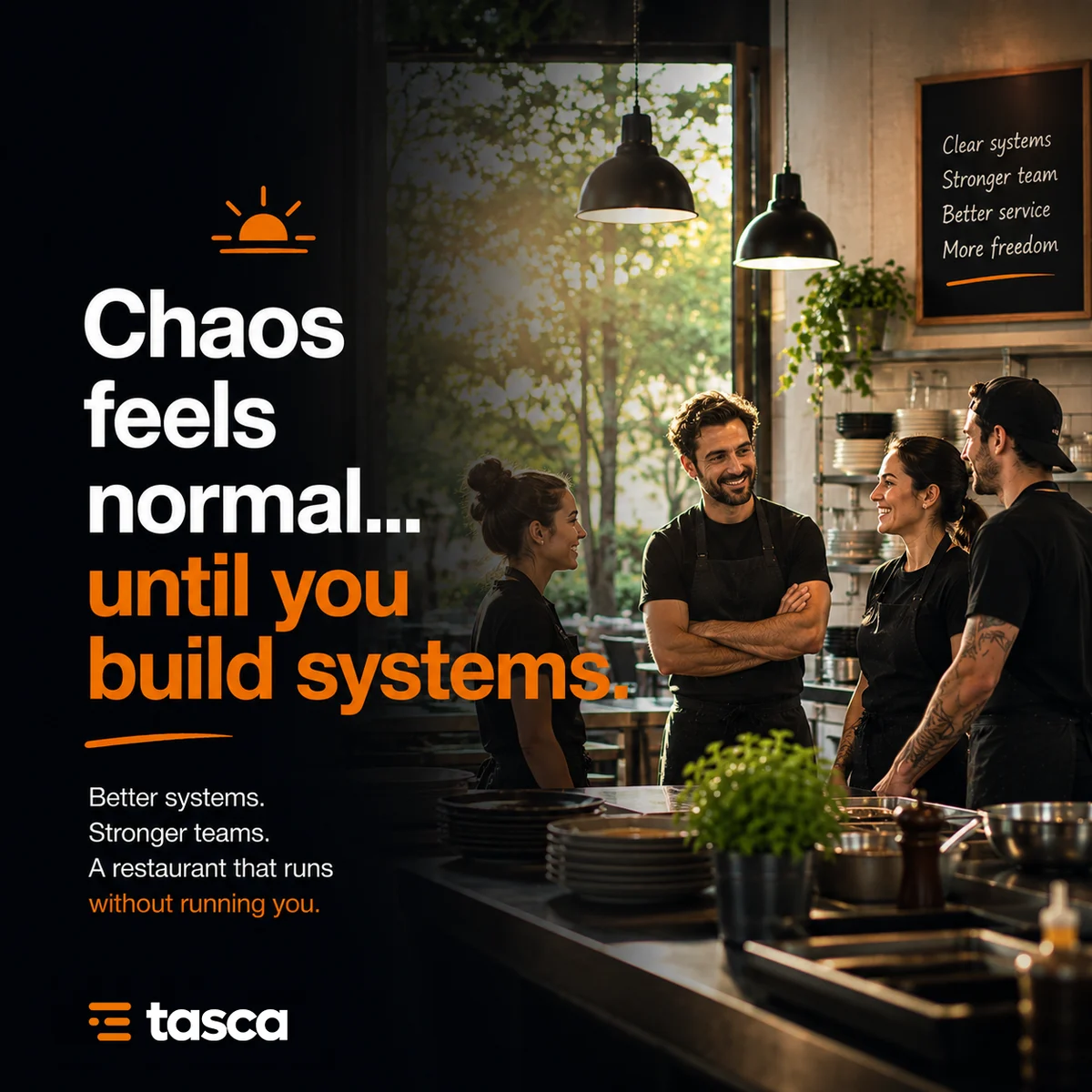
The difference between speed and chaos
Many restaurant owners believe stress is just part of the industry.
The pressure. The urgency. The constant interruptions.
And yes, restaurants will always move fast.
But there is a difference between a fast operation and a chaotic one.
The dangerous part is that most operational chaos becomes invisible over time. Teams adapt to it. Owners normalize it. And eventually, everyone starts surviving instead of operating.
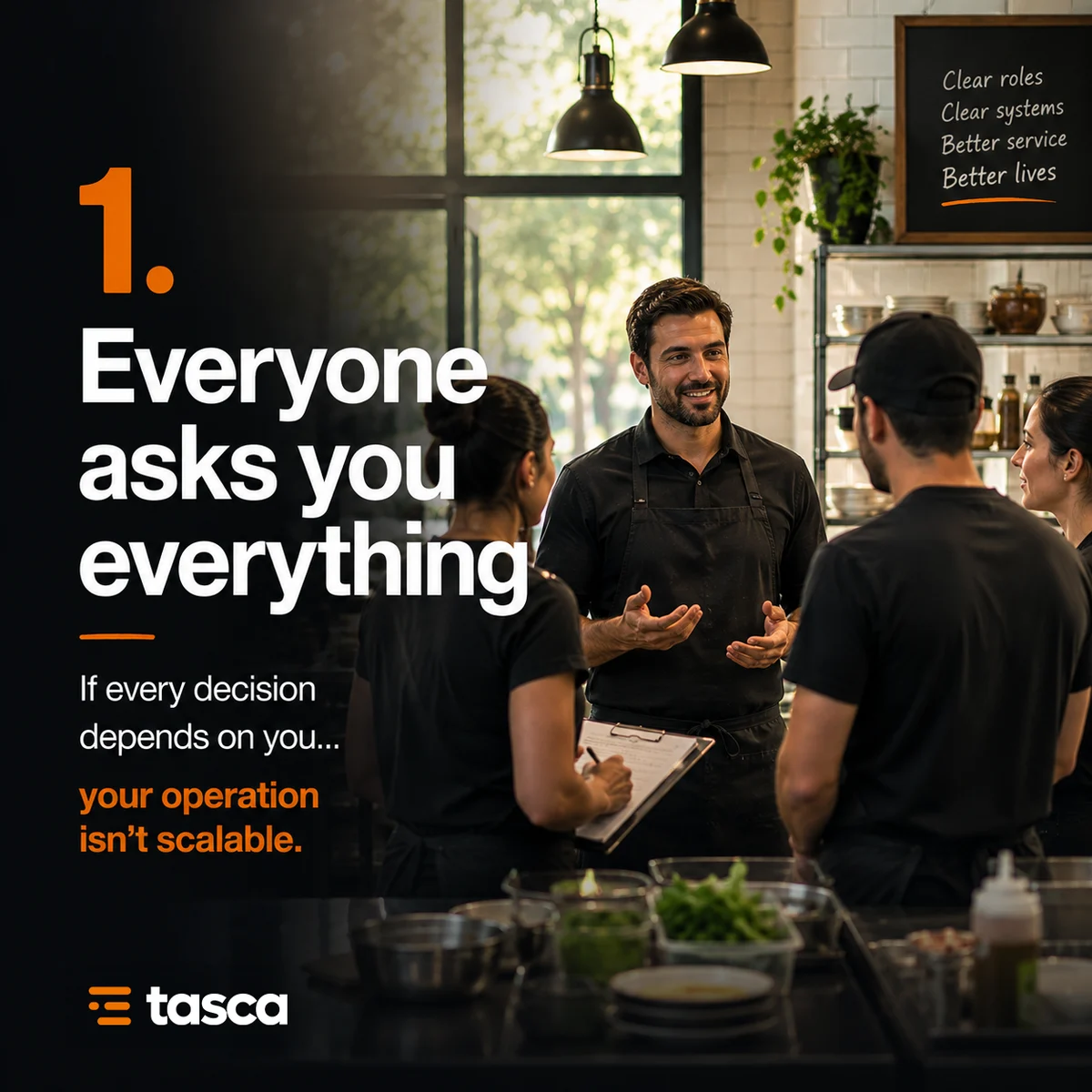
1. Everyone asks you everything
If every decision depends on you, your operation is not scalable.
Many restaurant owners become the center of every small decision: staff questions, customer issues, prep problems and operational confusion.
At first, it feels necessary.
But over time, this creates dependency.
The team stops acting independently because the system never gave them enough clarity to operate without constant supervision.
Strong operations create autonomy. Weak operations create dependence.
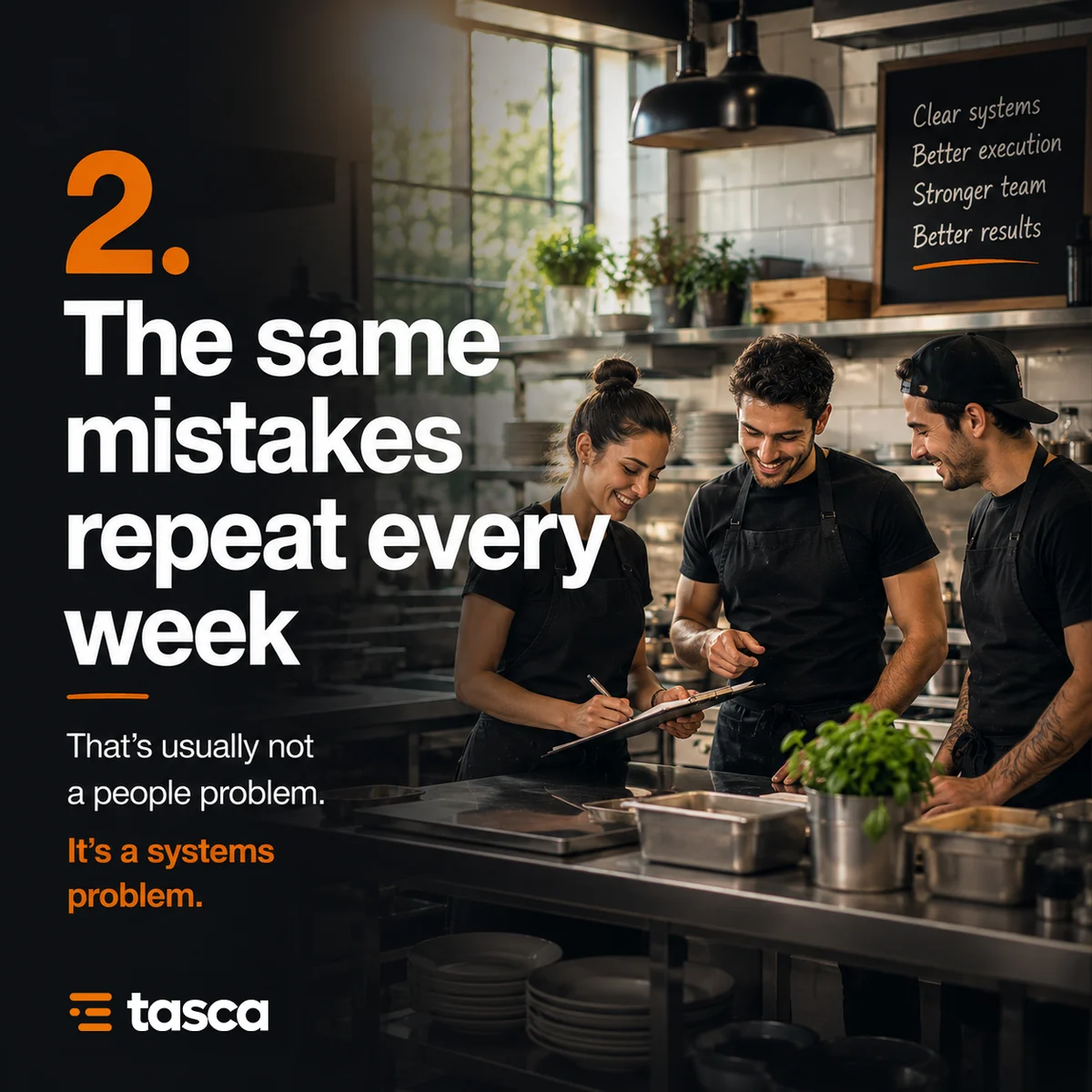
2. The same mistakes repeat every week
Repeated mistakes are rarely just people problems.
They usually point to something deeper: unclear systems, weak accountability, invisible expectations and poor operational visibility.
When the same issues repeat every week, the real issue usually is not effort.
It is the absence of repeatable systems.
Good teams still struggle inside unclear operations.
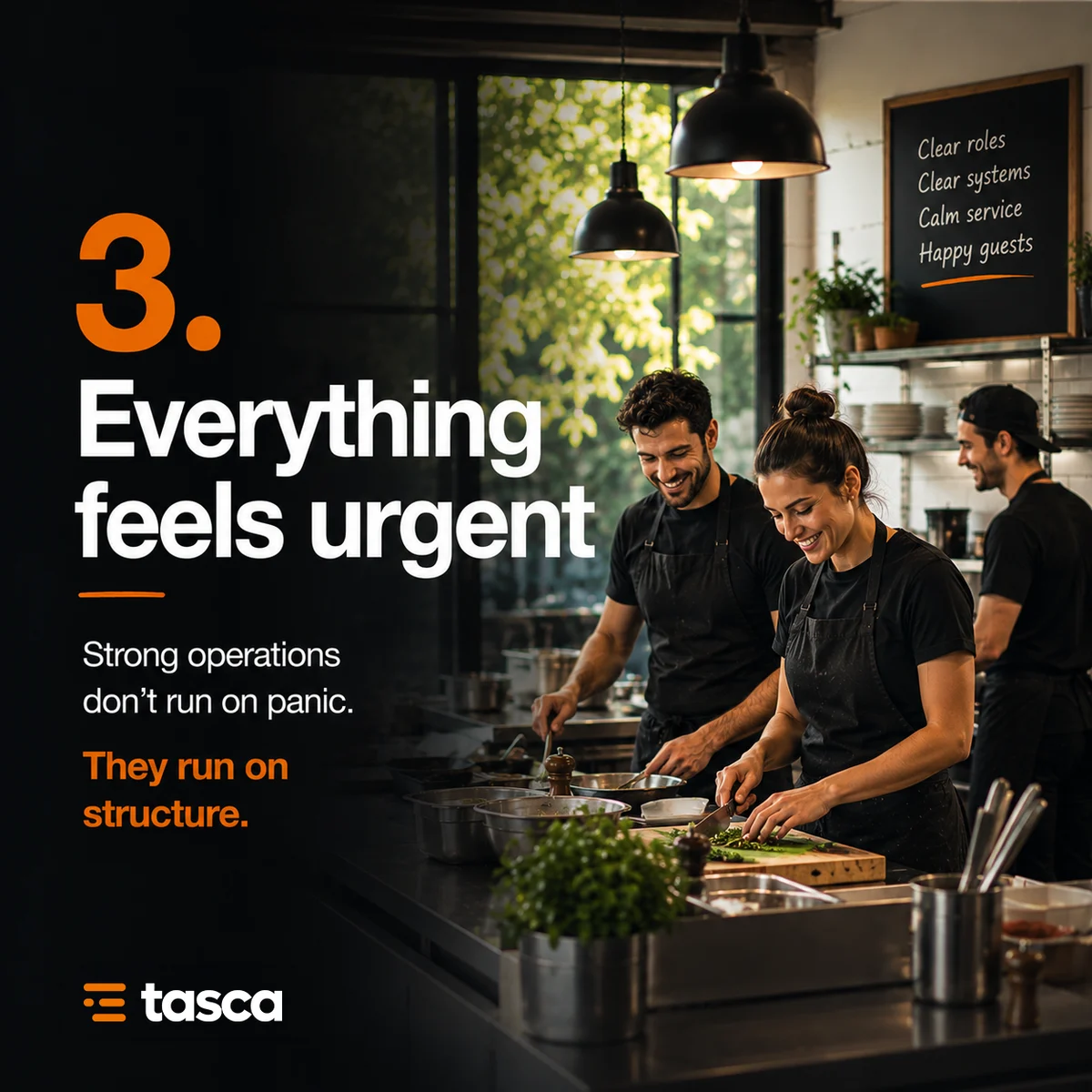
3. Everything feels urgent
One of the clearest signs of operational chaos is permanent urgency.
Every shift feels reactive. Everything becomes last minute, stressful, rushed and emotionally exhausting.
Strong restaurant operations do not run on panic. They run on structure.
Clear systems reduce unnecessary urgency because teams know what matters, what needs to happen and who owns each responsibility.
That creates operational calm. Not slowness. Clarity.
Chaos slowly becomes culture
This is the part many owners do not notice.
Chaos slowly becomes normal.
People stop questioning constant stress, repeated mistakes, lack of organization and reactive communication.
The operation adapts to dysfunction.
And eventually, everyone becomes tired without understanding why.
Strong systems change the entire atmosphere
The best restaurant operations are not perfect. But they are clear.
People know their responsibilities, standards, priorities and expectations.
That creates consistency, accountability, better execution and less mental overload.
Most importantly, it allows the business to grow without depending on constant firefighting.
Final thought
Chaos in restaurants does not always look dramatic.
Sometimes it looks normal.
That is what makes it dangerous.
Because once dysfunction becomes routine, growth becomes almost impossible.
Closing CTA
Strong restaurants do not eliminate pressure.
They eliminate unnecessary chaos through systems, clarity and structure.